
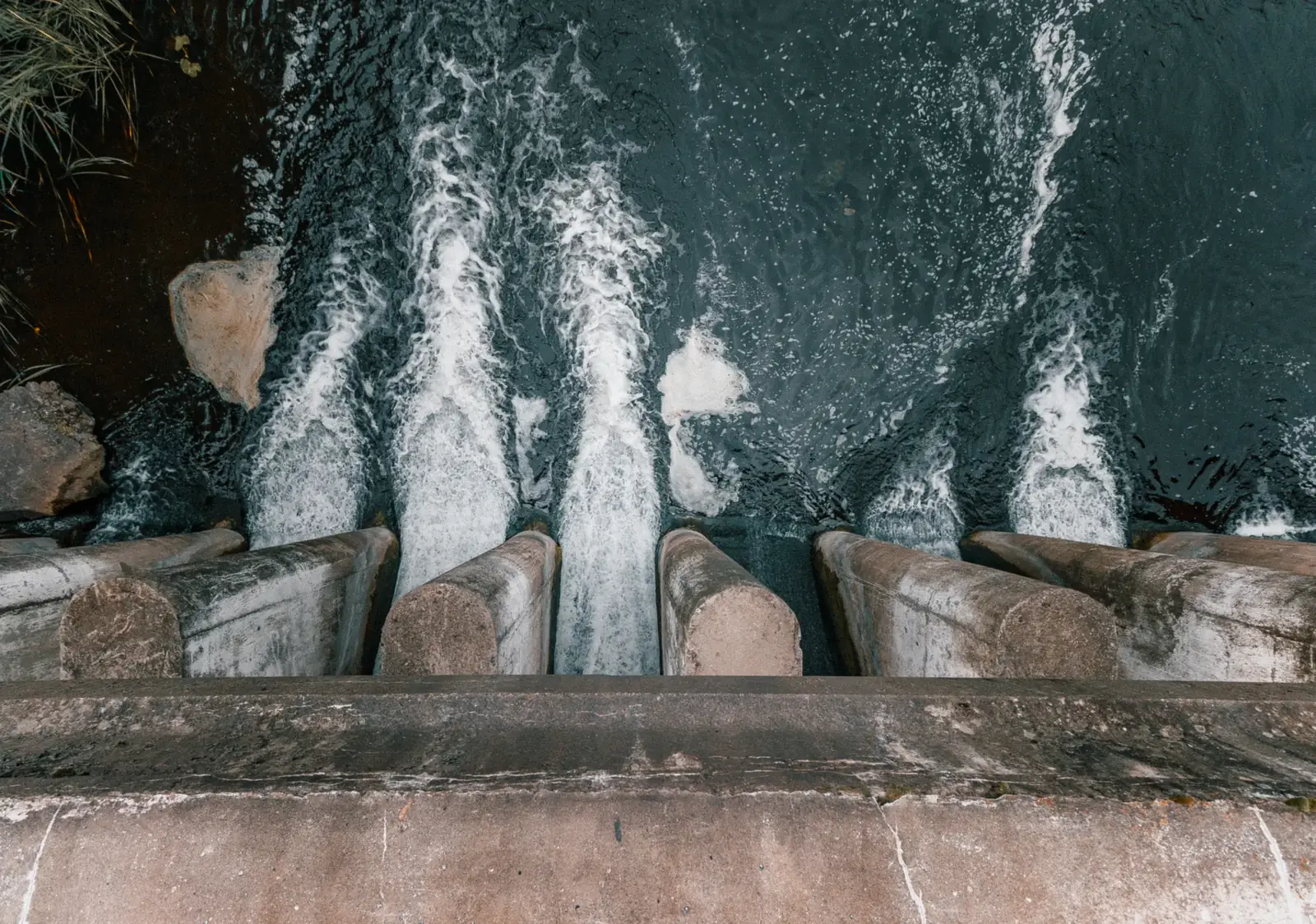
Hydropower turns the energy of falling or flowing water into electricity. It is a mature, long-established form of renewable energy in the UK, and it does something other renewables struggle to match: it can store energy and dispatch it when the grid needs it most. In 2025, hydroelectric power generated 5.4 TWh of electricity, accounting for 1.83% of the UK’s total generation. That share has fallen slightly from 2.00% in 2024, but the technology still offers flexibility to a power system increasingly reliant on wind and solar.
The UK’s hydropower is concentrated in Scotland, which holds 88% of the country’s capacity. Conventional hydro capacity has barely changed in recent years, and the main new interest is in pumped storage to help balance the grid. This guide explains how hydroelectric power plants operate, the real costs and emissions, and what the latest government data says about the technology’s future in Britain.
How hydropower works
At its core, a hydropower system converts the kinetic energy of moving water into mechanical energy, which a generator then turns into electricity. The power available depends on the flow rate (the volume of water passing per second) and the head (the vertical drop between the water intake and the turbine). Double either the head or the flow, and you roughly double the power output.
There are several distinct types of hydroelectric power plant, each suited to different geographical and commercial needs.
Run-of-river hydro
Run-of-river schemes divert a portion of a river’s natural flow through a turbine with little or no storage. The output follows the rhythm of rainfall and river flow, meaning generation fluctuates with the seasons. These are often smaller installations, sometimes retrofitted into old mill sites or weirs. They generally have a smaller environmental footprint than large dams because they do not flood vast areas of land, but they are more vulnerable to drought.
Storage hydro (reservoirs)
Storage hydroelectric power plants use a dam to hold water in a reservoir. This allows operators to store energy in the form of potential energy and release it on demand, within the limits of how much water is stored. When electricity demand spikes, water is released through the turbines. This dispatchability is a key advantage over wind and solar, which generate only when the weather permits. However, large reservoirs can alter local ecosystems and have higher upfront construction costs.
Pumped storage hydropower
Pumped storage is not a net source of energy; it is a store. It moves water between a lower and an upper reservoir. When electricity is cheap or plentiful, pumps push water uphill into the upper reservoir. When demand is high, the water flows back down through reversible turbines to generate electricity. According to the US Department of Energy, the typical round-trip efficiency of new pumped storage hydropower plants is around 80%, meaning you get back about 80% of the energy you put in.
Turbine types
The machinery inside these plants varies by site conditions:
- Pelton turbines use jets of water hitting buckets on a wheel. They are ideal for high head and low flow.
- Francis turbines are reaction turbines suited to medium-to-high head and medium flow. They are the most common in large plants and are used in reversible form for pumped storage.
- Kaplan turbines are propeller types with adjustable blades, designed for low head and high flow on large rivers.
- Archimedes screws rotate slowly as water falls through them. They are suited for very low-head sites like weirs and are considered fish-friendly because of their slow speed.
The global picture
Hydropower capacity is still growing worldwide, but its share of global electricity generation is shrinking.
Global installed hydropower capacity reached 1,469 GW at the end of 2025, according to the International Hydropower Association (IHA). Capacity grew by about 28 GW in 2025 alone. Pumped storage hydropower saw a record year, adding 11.6–11.7 GW (sources differ slightly), bringing total global pumped storage capacity past 200 GW for the first time. Some 243 GW of pumped storage is currently under construction, and 621 GW is in the pipeline at all stages of development.
China dominates this growth, accounting for more than 40% of global capacity additions in 2025. It has over 300 GW of hydropower under construction, including 218 GW of pumped storage. The Three Gorges Dam in China remains the largest power plant in the world by capacity at 22.5 GW, followed by Baihetan, the world’s second-largest hydropower plant, at 16 GW.
Despite this expansion, hydro’s share of global electricity generation fell to an all-time low of 14% in 2025. This is because global electricity demand grew faster than hydro output. Ember recorded global hydro generation of 4,437 TWh in 2025, up only 3 TWh on the previous year and insufficient to keep pace with demand. Since 2010, global hydro capacity has grown by 43%, but generation has only increased by 29%.
Hydropower in the UK: capacity, projects, and policy
The UK’s hydropower sector is mature. UK hydro capacity has been unchanged since 2023, and the government’s statisticians note there has been little new capacity in recent years.
Capacity and generation figures
According to the government’s Digest of UK Energy Statistics (DUKES) 2026, which covers 2025 data, UK hydro installed capacity was 1,895.85 MW at the end of 2025. This figure excludes pumped storage and has been unchanged since 2023. The majority, 1,477.08 MW, is classified as large-scale, while 418.77 MW is small-scale.
Generation in 2025 was 5,386 GWh (5.4 TWh), down 6.0% from 5,731 GWh in 2024. DUKES says this was in line with a drop in average rainfall of around 6%. Hydro’s share of total UK electricity generation fell to 1.83% in 2025, down from 2.00% the previous year. For context, all renewable sources combined made up 52.1% of UK generation in 2025, meaning hydro accounted for roughly 3.5% of renewable generation.
The highest output in the 1990–2025 series was 6,878 GWh in 2020, a year with unusually favourable rainfall. In contrast, generation dipped to 5,418 GWh in 2021. The technology’s load factor was 32.3% in 2025, down from 34.4% in 2024. There were 1,610 hydro generating sites in the UK at the end of 2025.
Regional distribution
Hydropower in the UK is heavily regionalised. Scotland dominates both capacity and generation:
- Scotland: 1,673.4 MW capacity (88% of UK total) and 4,880 GWh generation (91% of UK total).
- Wales: 167.9 MW capacity and 327 GWh generation.
- England: 43.4 MW capacity and 146 GWh generation.
- Northern Ireland: 11.2 MW capacity and 29 GWh generation.
This concentration largely reflects Scotland’s upland terrain, which offers more of the head and flow that hydro schemes need.
Notable schemes
- Sloy (Loch Lomond): Operated by SSE, this is what SSE calls Britain’s largest conventional hydro power plant, at 152.5 MW. It has four Francis turbines and has operated since 1950. In July 2026, SSE secured Section 36 consent for an option to convert it to pumped storage with up to 16 GWh of storage.
- Glendoe (Fort Augustus): Opened in 2009, this 100 MW SSE plant has a gross head of 600 metres, the greatest of any hydro station in the UK. It averages 175 GWh annually.
- Cruachan (Loch Awe): Known as the “Hollow Mountain”, this Drax pumped storage station opened in 1965. An £80 million upgrade due to finish in 2027 will raise its total generating capacity to 480 MW.
- Foyers (Loch Ness): A 300 MW SSE pumped storage facility completed in 1974.
Pumped storage and the LDES scheme
Great Britain has 2.8 GW of Long Duration Electricity Storage (LDES) across four existing pumped storage facilities in Scotland and Wales. The most significant is Dinorwig in Snowdonia, which can deliver up to 1,800 MW in under a minute. GE Vernova has been selected to replace two of Dinorwig’s 315 MW units, which is set to extend the plant’s life by at least 25 years.
The biggest news in the sector is Ofgem’s Long Duration Electricity Storage (LDES) cap and floor scheme. If a project’s revenues fall below the floor, consumers make up the difference through their bills; if revenues exceed the cap, the excess goes back to consumers through lower network charges. On 26 June 2026, Ofgem published a provisional “minded-to” list of 16 projects across four technologies, including three major pumped storage schemes in Scotland:
- Coire Glas (SSE): 1,440 MW with 32 hours’ duration.
- Earba (Gilkes Energy): 1,800 MW with 15 hours’ duration.
- Loch Kemp Storage (Statera): 660 MW with 22.3 hours’ duration.
As of October 2026, these awards are not final. The consultation closed in August 2026, with final awards expected in autumn 2026. SSE says any final investment decision on Coire Glas will depend on its own return thresholds, so none has been taken yet.
Small-scale and canal hydro
Small-scale hydro is supported by the Smart Export Guarantee (SEG), which since 1 January 2020 has required licensed suppliers to offer export tariffs to installations up to 5 MW. The Feed-in Tariff, which previously supported these projects, closed to new applications on 31 March 2019.
The Canal & River Trust says its waterways already support hydro schemes generating around 20 GWh per year, equal to around 6,200 homes. It is working with commercial developers to install schemes on river weirs, and has applied to the Environment Agency for schemes at three weirs on the River Trent.
Advantages and disadvantages of hydropower
Hydropower has clear strengths, but it is not without trade-offs.
| Feature | Advantage | Disadvantage |
|---|---|---|
| Carbon Emissions | Low lifecycle emissions. IPCC median is ~24 gCO₂-eq/kWh, against 490 for gas; only wind and nuclear have lower medians. | Reservoirs can emit methane and CO₂, especially in the first 10–20 years after flooding. Some studies of shallow tropical reservoirs have found very high methane emissions. |
| Reliability | Dispatchable. Can store energy and generate on demand. Pumped storage responds within seconds: Dinorwig can deliver up to 1,320 MW within 12 seconds. | Run-of-river schemes are dependent on rainfall. Droughts directly reduce output. |
| Lifespan | Long operational life. Plants like Sloy (1950), Cruachan (1965) and Foyers (1974) are still running. Dinorwig’s refit is set to extend its life by at least 25 years. | High upfront capital cost and long construction times for large dams. |
| Environment | Archimedes screws are generally regarded as fish-friendly, and intake screens keep fish out of turbines. | Large dams flood land, disrupt fish migration, and alter river ecosystems. |
| Cost | New plants commissioned in 2025 averaged a 43% capacity factor worldwide (IRENA). | Global hydro LCOE has risen 41% since 2010 (IRENA). |
Costs and levelised cost of energy (LCOE)
According to IRENA’s report on renewable power generation costs in 2025 (published July 2026, in real 2024 US dollars), the global weighted-average LCOE for new hydropower commissioned in 2025 was USD 62/MWh, up from USD 57/MWh for 2024. This is higher than onshore wind (USD 33/MWh) and solar PV (USD 44/MWh). IRENA attributes the rise to lower output rather than technology costs. Hydro’s total installed cost in 2025 was USD 2,079/kW with a capacity factor of 43%.
Environmental impact
Fish passage is a major consideration. Intakes require screens to protect aquatic life. Natural Resources Wales sets a maximum aperture of 3 mm in upland catchments and 1 mm near the sea or tidal reaches, to protect glass eels and elvers. Turbine type also matters; Environment Agency guidance notes that smaller turbines are generally more damaging to fish.
Climate change and drought risks
Hydropower is sensitive to rainfall and drought. UK generation fell 6% in 2025, in line with a drop in average rainfall of around 6%. In Scotland, SEPA reported a record 17 catchments at “Significant” water scarcity in September 2025, with the Lower Spey having its most low-flow days in a 70-year record; SEPA did not quantify the effect on hydro output.
Globally, the trend is similar. In 2025, droughts and operational factors cut hydro output in Brazil by 25 TWh, and severe drought cost Türkiye 17 TWh. The EU’s hydro generation fell 19% in 2022 due to drought, to its lowest level since at least 2000. One conference study projects that under a high-emissions scenario for 2030–2060, drought-driven European hydropower losses could be 12–36 TWh a year (median 21 TWh), with plants under 100 MW accounting for about 56% of these losses.
Frequently asked questions
How much of the UK’s electricity comes from hydropower?
In 2025, hydropower generated 5.4 TWh, which was 1.83% of the UK’s total electricity generation. This is down from 2.00% in 2024.
Why is most UK hydropower in Scotland?
Scotland holds 88% of UK hydro capacity and 91% of generation. This largely reflects its upland terrain, which offers more of the head (vertical drop) and flow that efficient hydro schemes need.
What is pumped storage hydro, and is it renewable?
Pumped storage moves water between two reservoirs. It pumps water uphill when electricity is cheap and generates when demand is high. It is a store of energy rather than a net source: it uses more electricity to pump than it generates. The round-trip efficiency of new plants is around 80%.
What is the largest hydroelectric power station in the UK?
Sloy, on Loch Lomond, is what SSE calls Britain’s largest conventional hydro power plant, at 152.5 MW. In terms of pumped storage, Dinorwig in Wales is the largest single facility, capable of delivering up to 1,800 MW in under a minute.
Is hydropower really low-carbon? Do reservoirs emit methane?
On a lifecycle basis, yes. The IPCC gives a median lifecycle emission of about 24 gCO₂-eq/kWh, though it cautioned that few studies had assessed reservoirs’ net emissions. Reservoirs can emit methane and CO₂, particularly in the first 10–20 years after flooding. The amount depends on the depth and shape of the reservoir, sunlight reaching the bed and wind.
Can I install a micro hydro system on my land or stream, and can I get paid for the electricity?
Often, yes. Small-scale schemes can be installed on streams or weirs; in England, run-of-river development follows Environment Agency guidance. Since 1 January 2020, new systems up to 5 MW can be paid for exported electricity through the Smart Export Guarantee (SEG). The Feed-in Tariff closed to new applicants on 31 March 2019.
Does drought or climate change reduce hydropower output?
Yes. Generation tends to follow rainfall. In 2025, UK hydro generation fell 6%, in line with a drop in average rainfall of around 6%. One study projects drought-driven losses in Europe of 12–36 TWh a year in 2030–2060 under a high-emissions scenario.
What is happening with Coire Glas and new pumped storage schemes in Scotland?
Coire Glas, Earba, and Loch Kemp are three major pumped storage projects on Ofgem’s provisional LDES “minded-to” list for cap and floor support. Final awards are expected in autumn 2026, and SSE has not yet taken a final investment decision on Coire Glas.