
Biomass energy is one of the few renewable technologies that can generate power on demand, regardless of whether the wind is blowing or the sun is shining. In 2025, bioenergy supplied 13.98% of the UK’s electricity, according to the government’s Digest of UK Energy Statistics (DUKES), making it a significant part of the nation’s low-carbon grid. Yet it remains one of the most contentious sources in the energy mix, caught between its role as a flexible backup for renewables and fierce criticism over its carbon accounting and air quality impacts.
This guide breaks down the science, the statistics, and the ongoing debate surrounding wood pellets, anaerobic digestion, and biofuels.
What biomass and bioenergy are, and how they work
Biomass is any organic material of recent biological origin. This includes wood, energy crops, agricultural residues, food and farm waste, sewage sludge, animal manure, and the biodegradable fraction of household and commercial waste. Bioenergy is the energy—electricity, heat, or fuel—produced from these materials.
The UK government’s Biomass Strategy defines biomass broadly, covering purpose-grown crops, co-products, residues, and biogenic waste from both domestic and imported sources. The technology routes used to convert this material into energy vary significantly depending on the feedstock and the desired output.
Combustion and power generation
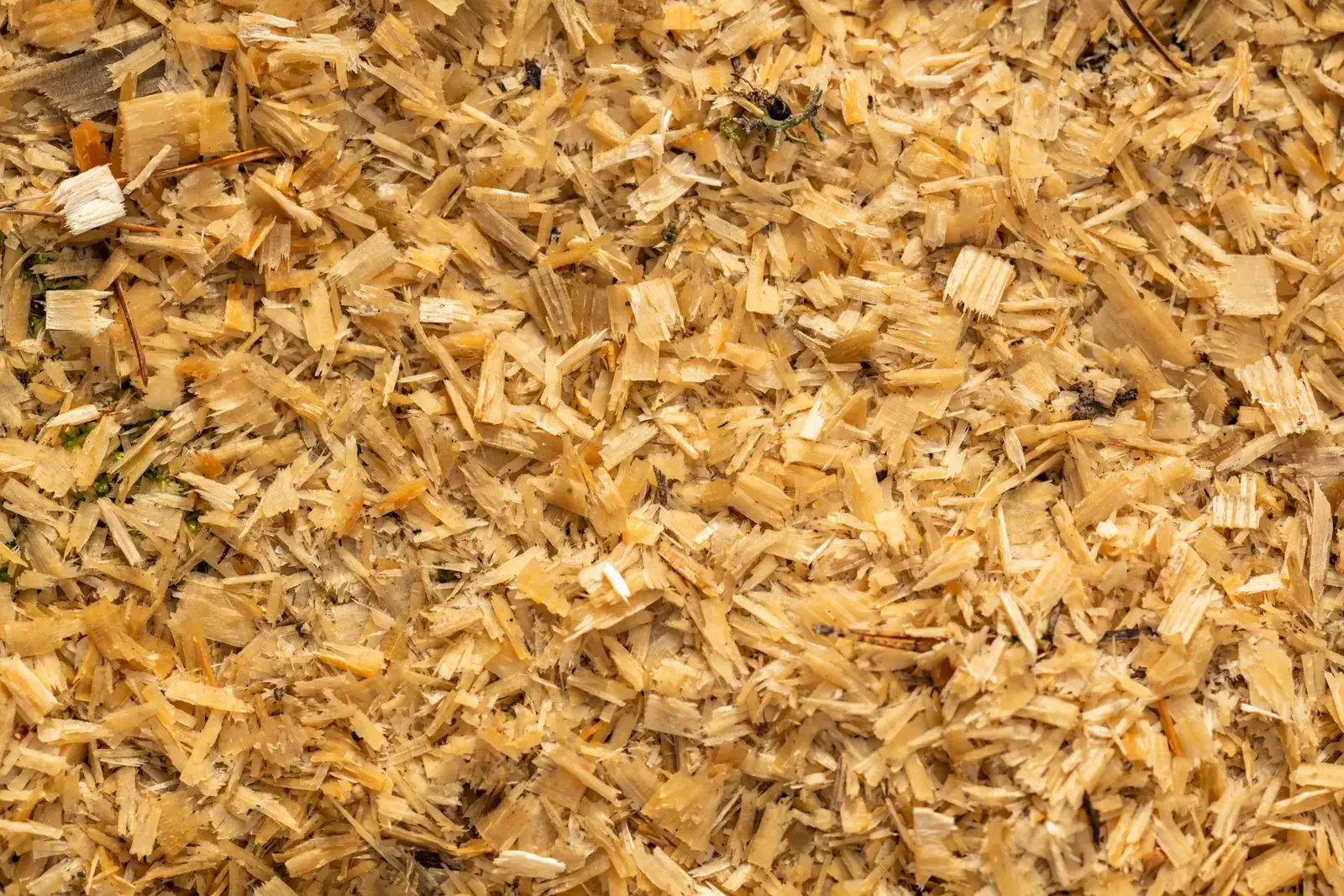
The most familiar route is combustion. Biomass, usually wood pellets or chips, is burned in a boiler to raise steam that drives a turbine. In the UK, several large coal-fired power stations were converted to burn wood pellets to generate electricity. This is the model used by Drax Power Station, which currently runs four biomass units with a combined capacity of 2.6 GW.
Combined heat and power (CHP) systems use the same combustion process but capture the waste heat. This heat is used for industrial processes or district heating networks, giving CHP plants a much higher overall efficiency than electricity-only plants.
Anaerobic digestion and biomethane
Anaerobic digestion (AD) is a biological process where bacteria break down wet organic material—such as food waste, manure, slurry, crops, and sewage sludge—in the absence of oxygen. This process produces biogas, which is primarily methane and CO2, and a nutrient-rich digestate that can be used as fertiliser.
When this biogas is upgraded by removing CO2 and other impurities, it becomes biomethane. Biomethane can be injected into the national gas grid or used as vehicle fuel. Landfill gas and sewage gas are similar forms of biogas captured from waste sites and water treatment works.
Energy from waste and liquid biofuels
Energy from waste (EfW) involves the incineration of residual (non-recyclable) waste to generate electricity and/or heat. Only the biodegradable fraction of this waste is counted as renewable.
Liquid biofuels are used primarily in the transport sector. Bioethanol is fermented from sugar or starch crops and blended into petrol. Biodiesel (FAME) is made from vegetable oils, used cooking oil, or animal fats. Hydrotreated vegetable oil (HVO) is a “drop-in” renewable diesel made by treating oils and fats with hydrogen. Sustainable aviation fuel (SAF) is a drop-in jet fuel derived from wastes, residues, oils, or synthetic routes.
BECCS and traditional biomass
Bioenergy with carbon capture and storage (BECCS) involves fitting a biomass plant with carbon capture technology to store the CO2 permanently underground. Because the plants absorbed CO2 as they grew, BECCS can theoretically deliver net negative emissions.
Traditional biomass—burning wood, charcoal, crop waste, or dung on open fires or basic stoves for cooking and heating—is distinct from modern bioenergy. It is used mainly in low-income countries and is a major source of household air pollution.
The global picture
Globally, bioenergy generated about 2.24% of electricity in 2025, according to Ember data, a slight decline from its peak of around 2.32% in 2021 and 2022. For context, renewables overall supplied 33.8% of global electricity in 2025, overtaking coal for the first time. Bioenergy is counted within that total renewable figure.
In terms of heat, the International Energy Agency (IEA) says modern bioenergy is the largest renewable heat source, mostly in industry, where it supplies about 12 EJ of renewable industrial heat. Traditional biomass supplied 10% of global heat demand in 2024 and currently provides 21% of heat for buildings worldwide. The IEA projects that its share of global heat demand will fall to 7% by 2030.
Global biofuel demand is forecast by the IEA to rise by 43 billion litres by 2030, reaching 8% of transport fuel demand by volume. The US remains the largest biofuel producer and consumer, while growth is led by Brazil, Indonesia, and India. Global SAF use was about 1 billion litres in 2024 and is forecast to reach 9 billion litres by 2030.
The IEA has also revised its outlook for bioenergy-for-power deployment downwards.
According to the World Health Organization, about 2.1 billion people cook on open fires or inefficient stoves. Household air pollution caused an estimated 2.9 million deaths in 2021, including over 309,000 children under five.
The UK picture: capacity, share of electricity, and policy
In 2025, total renewable generation reached a record 153.0 TWh. Renewables supplied 52.1% of UK electricity generation, up from 50.5% in 2024. Bioenergy generation rose 2.2% to 41.0 TWh in 2025, accounting for 13.98% of all UK electricity generation.
Plant biomass and the Drax deal
Plant biomass set a record of 27.8 TWh in 2025, up 4.8%. It accounts for around 18% of renewable generation and 9.47% of total UK electricity generation. Installed capacity for plant biomass stood at 4,635 MW at the end of 2025.
Drax Power Station, near Selby in North Yorkshire, is the largest contributor, accounting for 2.6 GW of that capacity across four biomass units. Drax says it supplied around 5% of UK electricity on average in 2024, rising to about 8% on low-wind days. According to its half-year results, its biomass generation was 7.0 TWh in the first half of 2026.
The government’s new support deal for Drax, signed in November 2025 with the Low Carbon Contracts Company, covers 1 April 2027 to 31 March 2031 and remains subject to the usual conditions precedent. This is a “low-carbon dispatchable Contract for Difference” (CfD). The strike price is £109.90/MWh (in 2012 prices). The deal includes a generation collar of about 6 TWh a year, capping the load factor eligible for support at 27%. Drax can still sell power above the collar on the open market. Ember, a think tank critical of biomass, puts Drax’s historical average load factor outside the energy crisis years at 64%.
The government estimates the subsidy at about £470m a year (2023/24 prices), or around £1.88bn over four years. It states the deal halves consumer subsidies compared to previous arrangements, saving nearly £6 per household annually. Drax cites analysis it commissioned from Baringa estimating consumer savings of £1.6–3.1bn over the term compared to alternative dispatchable generation.
Sourcing remains contested. In October 2022, BBC Panorama alleged that Drax sourced wood from old-growth forests in British Columbia; Drax disputed the claims. Ofgem’s investigation (2023–2024) found an “absence of adequate data governance and controls” that led to misreported data, but no evidence of deliberate misreporting and no evidence that Drax fell below the 70% sustainable-biomass threshold. Drax paid £25 million into Ofgem’s Voluntary Redress Fund and commissioned an independent audit, whose first phase (April 2026) judged its 2023/24 Canadian reporting “materially correct”; the rest is under way. The FCA closed its investigation into Drax’s sourcing statements in June 2026 with no action.
Anaerobic digestion and biogas
Anaerobic digestion generated 3.58 TWh of electricity in 2025 from 640 MW of capacity, representing 1.22% of UK generation. Landfill gas generated 2.68 TWh, and sewage gas generated 957 GWh.
According to a July 2026 briefing from the Parliamentary Office of Science and Technology, about 750 AD plants were operating in the UK as of March 2026. These produce an estimated 21 TWh of biomethane annually, of which around 7 TWh is injected into the gas grid. The Green Gas Support Scheme (GGSS) provides tariffs for biomethane injected into the grid. The scheme opened to applications in November 2021, and the government plans to extend its commissioning deadline from 31 March 2028 to 31 March 2030, subject to parliamentary scrutiny.
Wood pellet imports and land use
Large biomass power stations depend heavily on imported wood pellets. In 2025, the UK imported 9.77 million tonnes of plant biomass (wood pellets and similar). The United States supplied 7.23 million tonnes (about 74%), Latvia supplied 1.14 million tonnes, and Canada supplied 0.90 million tonnes.
Across all biomass used in renewable energy generation, the Biomass Strategy put domestic sources at about 66% (2022 figures), with the rest imported. The strategy notes that sustainable biomass is a limited resource. Consequently, the government applies a “priority use principle”, directing biomass towards uses that offer the greatest environmental, economic and social benefits, with harder-to-decarbonise sectors among the priorities.
Heat and transport
In the heat sector, solid biomass accounted for 61% of renewable heat fuel in 2025. This was followed by heat pumps at 26%, wastes at 7.4%, and biogases at 4.4%.
In transport, demand for biofuels fell 3.8% to 2,647 ktoe in 2025. Biogasoline (bioethanol) grew by 9.0%, while biodiesel fell by 17%. Bioethanol and biodiesel together made up 80% of renewable transport demand. Bio-jet fuel made up 11% of all transport renewables in 2025, though it was only 2.1% of total aviation fuel demand. The UK’s SAF mandate requires 2% of jet fuel to be sustainable in 2025, rising to 10% in 2030 and 22% in 2040.
Advantages and disadvantages
| Feature | Advantage | Disadvantage |
|---|---|---|
| Reliability | Dispatchable power with a 63% load factor in 2025, far higher than wind (24–36%) or solar (11%). | Low thermal efficiency (35–40%) for electricity-only plants. |
| Carbon | Potential for net negative emissions via BECCS. | Not carbon-free at the chimney; CO2 is released immediately. |
| Waste | AD and EfW turn food waste, manure and residual waste into energy; AD also produces fertiliser. | Air quality concerns from domestic wood burning (PM2.5). |
| Versatility | Supplies electricity, heat, and drop-in transport fuels. | High import dependence; about 74% of imported pellets came from the US in 2025. |
| Land use | Uses residues and waste products. | Competition with food crops and land use for energy crops. |
The carbon accounting debate
Biomass is not carbon-free at the chimney. Burning wood releases CO2. Its classification as “renewable” rests on two assumptions: that regrowing forests reabsorb the carbon, and that under UN reporting rules, biomass emissions are counted in the land-use sector, not the energy sector.
IPCC inventory guidance records CO2 from burning biomass in the energy sector only as a memo item to avoid double counting, and does not automatically treat it as carbon neutral. A 2017 Chatham House report concluded that, in most circumstances and comparing technologies of similar ages, using woody biomass for energy releases higher levels of emissions than coal and considerably higher levels than gas at the point of generation. It estimated carbon payback periods ranging from less than 20 years to many decades, and in some cases centuries; mill residues perform best, while whole trees and converting natural forests to plantations perform worst.
The industry and many forest scientists dispute this, arguing that pellets from residues and thinnings from sustainably managed forests carry low lifecycle emissions; 145 academics publicly challenged the Chatham House paper in 2017. The debate remains unresolved. The UK Biomass Strategy commits to developing a cross-sectoral sustainability framework, subject to consultation.
Air quality
The air quality debate centres on domestic wood burning rather than large power stations. According to the latest Defra figures, domestic combustion contributed 20% of total UK PM2.5 emissions in 2024. Indoor domestic wood burning alone contributed 12%.
Defra ran a UK-wide consultation from January to March 2026 proposing stricter smoke standards for new stoves and mandatory labelling of stoves and fuels; no government response had been published as of October 2026. Large biomass plants are regulated industrial sites and are not the primary source of this particulate matter.
Costs and outlook
The future of large-scale biomass in the UK is shifting. The Drax CfD caps subsidised generation at a 27% load factor, and Ember expects Drax’s output to fall by around 50–55%. Ember estimates that by 2030, Drax will supply just 1.8% of total electricity generation.
The government’s Biomass Strategy outlines a move away from unabated emission uses of biomass towards BECCS by 2035, with uses that produce negative emissions prioritised by 2050. The strategy restates the ambition of at least 5 MtCO2/yr of engineered greenhouse gas removals by 2030.
In transport, the SAF mandate requires a rising share of sustainable jet fuel. In heat, biomass will likely have a role in off-gas-grid homes not readily suitable for heat pumps, provided air quality impacts are mitigated.
Frequently asked questions
Is biomass energy really renewable and carbon neutral?
Biomass is classified as renewable because the carbon released when it is burned is theoretically reabsorbed by new plant growth. However, it is not carbon-free at the point of use. Burning wood releases CO2 immediately. Under UN reporting rules these emissions are counted in the land-use sector, not the energy sector. Chatham House estimated payback periods from less than 20 years to many decades, and in some cases centuries, depending on the source of the wood; the industry disputes this.
How much of the UK’s electricity comes from biomass?
In 2025, bioenergy supplied 13.98% of UK electricity generation, producing 41.0 TWh. Plant biomass alone accounted for 9.47% of total generation. Bioenergy had a high load factor of 63% in 2025, making it a crucial dispatchable resource for grid stability.
Where does the wood burned at Drax come from, and what did the Ofgem investigation find?
About 74% of the 9.77 million tonnes of wood pellets the UK imported in 2025 came from the United States. Ofgem’s investigation (2023–2024) found inadequate data governance that led to misreported Canadian sourcing data, but no evidence of deliberate misreporting and no evidence that Drax fell below the 70% sustainable biomass threshold. Drax paid £25 million into a redress fund; an independent audit is ongoing, and the FCA closed its investigation in June 2026 with no action.
Why is the government still subsidising Drax after 2027, and how much will it cost?
The government cites security of supply between 2027 and 2031, on advice from the system operator NESO. It estimates the cost at about £470m a year (2023/24 prices). Support is capped at about 6 TWh a year (a 27% load factor); Drax can sell extra output on the open market without subsidy.
Can I get a grant for a biomass boiler in my home?
Yes, in England and Wales, through the Boiler Upgrade Scheme (BUS). The grant is £5,000 for a biomass boiler. However, eligibility is strict: the property must be off the gas grid and in a rural location, and you must be replacing a fossil-fuel system. Biomass made up 608 of 151,136 applications to the end of August 2026.
Are wood-burning stoves bad for air quality?
Indoor domestic wood burning is a significant source of PM2.5 emissions, contributing 12% of total UK PM2.5 in 2024, according to Defra. Domestic combustion as a whole contributed 20%. Defra consulted in early 2026 on stricter standards for stoves and fuels, but no government response had been published as of October 2026.
What is BECCS, and is Drax going to build it?
BECCS (bioenergy with carbon capture and storage) captures CO2 from biomass combustion and stores it underground, potentially delivering net negative emissions. Drax received development consent in January 2024 for carbon capture on two of its units. However, as of October 2026, there is no investment decision or government contract for BECCS. Drax says the new CfD keeps the option open.
What is the difference between biogas, biomethane and biofuels like E10 and SAF?
Biogas is produced by anaerobic digestion and consists mainly of methane and CO2. When this biogas is upgraded to remove CO2 and impurities, it becomes biomethane, which can be injected into the gas grid or used as vehicle fuel. E10 (petrol containing up to 10% renewable ethanol) and SAF (sustainable aviation fuel) are liquid biofuels used in transport. E10 is now the standard petrol grade across the UK, while the SAF mandate rises to 22% of jet fuel by 2040.