
Renewable technology for the home is available, but there is no single solution. The best choice depends on your roof, your garden, your insulation and your current heating system. Renewable energy for home use, such as solar panels and heat pumps, is now common, but costs and results vary by location and house type.
This guide uses 2026 data on costs, grants and performance. It is general information, not advice: savings depend on the home, usage and tariff, so check current scheme rules on GOV.UK and use MCS-certified installers.
Fabric first: insulate before you install technology
Before you spend money on solar panels or a heat pump, it is worth tackling heat loss. The Energy Saving Trust (EST) says an uninsulated home loses around 25% of its heat through the roof and about 33% through the walls. EST also says loft insulation “can help make your home heat pump-ready”, and Ofgem’s Boiler Upgrade Scheme (BUS) guidance says heat pumps “perform best in a well-insulated home”. Our energy conservation tips cover simpler measures.
Loft insulation is the most straightforward starting point. The recommended minimum depth is 270 mm of mineral wool. EST puts the cost of installing from 0 mm to 270 mm at about £750 in Great Britain and £1,100 in Northern Ireland, and topping up from 120 mm at about £600 in GB and £700 in NI (2026). Correctly installed loft insulation lasts around 40 years. Fix damp before insulating, and note that EST does not recommend spray foam sold as a fix for a leaking roof.
EST puts cavity wall insulation at around £2,200 in GB and £1,000 in NI (2026). Homes built after the 1920s usually have cavity walls, and those built from the 1990s onwards usually already have wall insulation. Make sure the work carries a 25-year CIGA guarantee or an independent insurance-backed guarantee.
How it works: the technologies explained
Rooftop solar PV
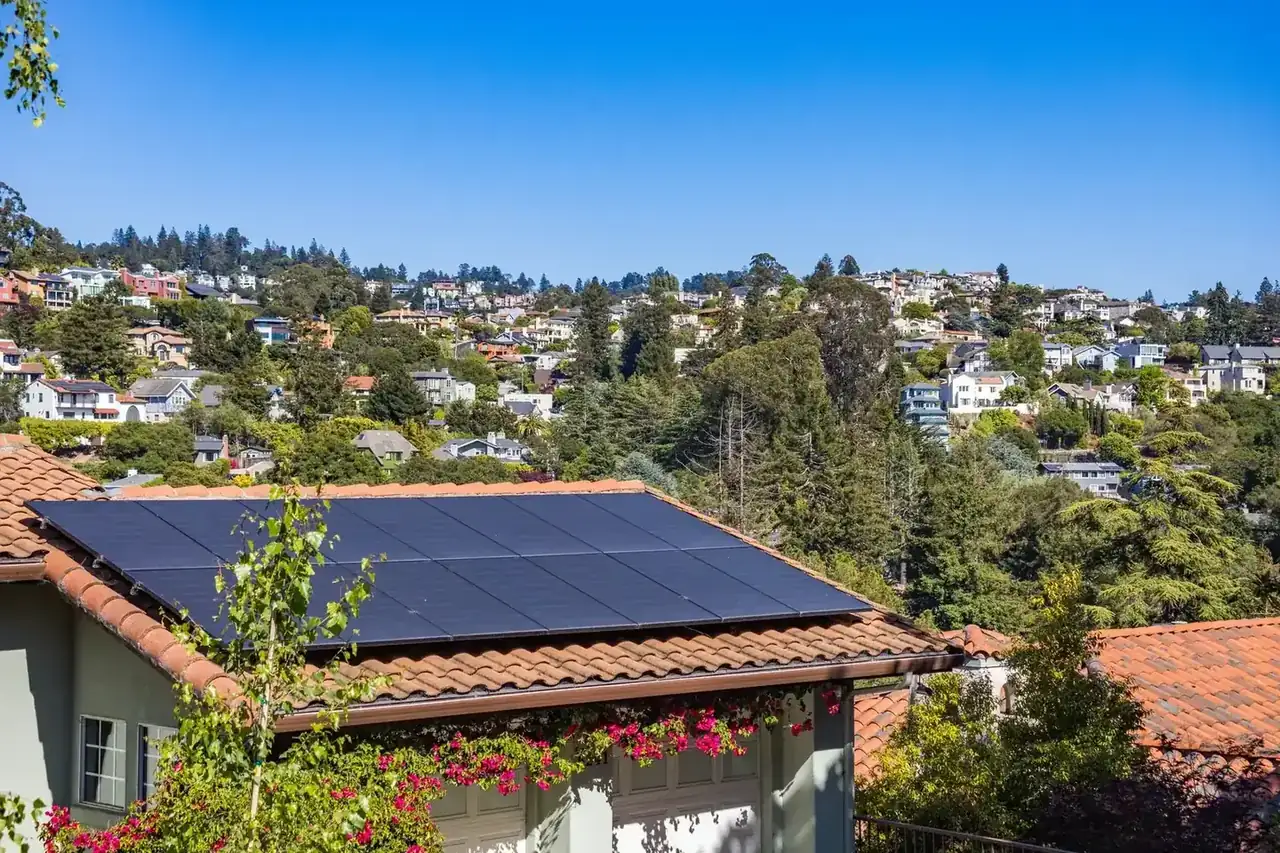
Solar photovoltaic (PV) panels convert sunlight into electricity. EST says the average home system is around 4.5 kWp, using about 12 panels across 20–30 m² of roof, and costs around £7,600 (2026). Government (DESNZ) data for 2025/26 shows a median cost of £1,595 per kW for systems up to 4 kW and £1,546 per kW for 4–10 kW systems.
Output varies by location. The European Commission’s PVGIS tool estimates that, at optimal tilt, a system in London produces about 1,020 kWh per kWp a year, against about 890 kWh in Manchester, 910 kWh in Edinburgh and 1,120 kWh in Plymouth. East- or west-facing roofs produce 15–20% less than south-facing ones (EST).
Panels last 25 years or more, but inverters typically need replacing after around 12 years. Our guide to solar energy explains the underlying physics in more detail.
Home battery storage
Batteries store electricity for later use. EST gives two cost ranges on two pages (2026): “around £5,000 to £8,000” and “£1,500 to £10,000”, with a 5 kWh system costing around £4,600. A typical home battery is about 10 kWh and lasts about 10–12 years. Some energy is lost in storage. A battery can charge from cheap off-peak grid electricity even without solar panels.
Batteries are zero-rated for VAT until 31 March 2027. MCS counted more than 40,000 certified battery installations in 2025 and 36,000 in the first half of 2026, almost double the same period of 2025. In an MCS worked example (2019 modelling), a home-all-day household used 29% of its solar without a battery and 69% with a 7.5 kWh battery.
Air source heat pumps (ASHP)
Air source heat pumps transfer heat from the outside air, via a refrigerant and compressor, into radiators or underfloor heating and a hot water cylinder. EST says installation typically costs around £12,000. DESNZ Boiler Upgrade Scheme data for April–June 2026 gives a median installed cost of £12,908 in England and Wales before the grant, with an interquartile range of £11,128–£15,627.
On our arithmetic, after the £7,500 BUS grant a median installation would cost the householder about £5,400. EST’s Flexible Futures research (July 2026) puts the average cost to switch at £11,700 without support, £4,200 with the grant, and £500 if you also count avoiding a replacement boiler. EST says savings of “up to around £800 a year” are possible with the right tariff, and describes payback as “two to four years” in one place and “as little as four years” in another.
EST says that for every unit of electricity, a heat pump gives “three to four times as much heat (300 to 400%)”, compared with about 90% for an A-rated boiler. Your installer must calculate the Seasonal Performance Factor (SPF) for your home before work starts. Real-world results are lower than the headline: interim data from the Electrification of Heat trial (published 2023) found a median SPF of 2.80 for air source heat pumps, and 2.44 on the coldest days.
Ground source heat pumps (GSHP)
Ground source heat pumps draw heat from the ground through trenches or boreholes. EST says they typically cost around £15,000 with trenches, rising to around £57,000 if you need a borehole. BUS data for April–June 2026 shows a median cost of £27,232, with an interquartile range of £18,136–£42,110. EST says they tend to be more efficient than air source heat pumps but are considerably more expensive, and they need space for trenches or boreholes. For heat from deeper underground, see our explainer on geothermal energy.
Small wind turbines
Small wind turbines are rarely worthwhile for typical homes. EST says a 6 kW pole-mounted system costs around £35,000, and a well-sited one could save around £650 a year in GB and £800 in NI, plus SEG payments in GB. As illustrative arithmetic, simple payback on £35,000 at £650 a year is over 50 years, before SEG income shortens it. EST says turbines suit exposed, windy locations and are less suitable for built-up or sheltered areas. Planning permission is always required in Wales and Northern Ireland; in England and Scotland, permitted development applies only in limited cases. Our wind energy guide covers turbine mechanics.
Biomass boilers
Biomass boilers burn pellets or logs. EST says an automatically fed pellet boiler for an average home costs around £9,200 installed; BUS data for April–June 2026 shows a median of £13,765, at a median capacity of 22.8 kW. If you have a modern condensing gas boiler, EST says biomass is likely to cost more to run. Wood burning releases particulates and nitrogen oxides. More in our biomass energy article.
Solar thermal
Solar thermal systems heat water only, not your home. EST says they provide roughly half of annual hot water, around 90% in summer falling to around 25% in winter. A typical system costs around £5,300 and needs around 5 m² of suitable roof plus a solar-compatible cylinder. EST notes that if your roof suits collectors, “it’s worth considering a solar panel system for free, renewable electricity instead”.
Real-world examples and recent changes
Heat pump permitted development in England was relaxed on 29 May 2025, allowing units within 1 m of the boundary, larger units and twice as many heat pumps on detached homes. The Warm Homes Plan (21 January 2026) confirmed BUS funding to 2029/30.
On 28 April 2026 the BUS introduced a £2,500 grant for air-to-air heat pumps and relaxed the EPC requirement, and installers must now deduct the grant upfront. Air-to-air take-up is only starting: 145 applications and no redemptions by August 2026. On 27 August 2026 plug-in solar became legal in Great Britain, capped at 800 W. EST estimates these kits cost from about £450, produce about 700 kWh a year and save £70–£100 a year (2026).
MCS counted over 60,000 heat pump installations in 2025, the most ever. In the first half of 2026, installations were 17% lower than a year earlier, while new-build heat pump installs rose 23%. The Heat Pump Association linked the drop to ECO winding down and slower Social Housing Fund delivery. BUS applications then reached monthly records in July and August 2026.
What the numbers say: costs and performance
Solar PV
- Cost: around £7,600 for a 4.5 kWp system (EST, 2026).
- Output: UK fleet average roughly 805–970 kWh per kW (2024–2025).
- Payback: about 9–12 years depending on location, including export payments (EST, July 2026 prices).
- VAT: zero-rated until 31 March 2027.
Air source heat pumps
- Cost: around £12,000 typical (EST, 2026); median £12,908 (BUS data, April–June 2026).
- Grant: £7,500 BUS, or £9,000 for off-gas-grid oil or LPG homes from 21 July 2026 to 31 March 2027.
- Efficiency: median SPF of 2.80 in the Electrification of Heat trial (interim data, 2023).
- Savings: up to around £800 a year with the right tariff (EST, 2026); actual savings depend on the home, usage and tariff.
Ground source heat pumps
- Cost: around £15,000 (trenches) to £57,000 (borehole) (EST); median £27,232 (BUS data, April–June 2026).
- Grant: £7,500 BUS.
Biomass
- Cost: around £9,200 for a pellet boiler (EST); median £13,765 (BUS data, April–June 2026).
- Grant: £5,000 BUS (rural, off-gas homes only).
Limitations and honest assessment
No technology suits every home. Solar panels do not generate at night, and output drops in winter. Heat pumps perform best in a well-insulated home. EST says that on standard tariffs, where electricity is nearly four times more expensive than gas, heat pumps can cost slightly more to run than new gas or oil boilers; on a heat pump time-of-use tariff they can cost less.
Small wind turbines need exposed sites, face planning limits, and EST says no specific schemes fund them.
Biomass boilers are cleaner than log stoves but still emit particulates; smoke control areas require an approved appliance.
Solar thermal needs a compatible cylinder (few combi boilers are compatible) and has no BUS grant.
The UK angle: grants and regulations
The Boiler Upgrade Scheme is the main grant for heat pumps and biomass in England and Wales. It offers £7,500 for air-to-water and ground source heat pumps, £2,500 for air-to-air (from 28 April 2026) and £5,000 for biomass in rural, off-gas homes. A £9,000 grant for off-gas-grid homes heated by oil or LPG runs from 21 July 2026 to 31 March 2027. You must own the property and use an MCS-certified installer.
In Scotland, Home Energy Scotland offers a heat pump grant of up to £7,500 plus an optional interest-free loan of up to £7,500, and a £1,500 rural uplift; air-to-air and hybrid systems are excluded. EST says Northern Ireland has no specific heat pump grant at present.
The Warm Homes Loan Scheme’s consumer phase is launching from September 2026. A chargepoint can be financed only as part of a solar or battery installation. Check GOV.UK for which lenders are taking part.
EPCs matter for some schemes. Warm Homes: Local Grant in England requires EPC D–G and has an income cap. ECO required D–G for homeowners and E–G for renters, and ECO4 ends on 31 December 2026. The BUS relaxed its EPC requirement on 28 April 2026. Private landlords must reach EPC C by October 2030 unless exempt.
For flat owners and renters with private off-street parking, the EV chargepoint grant covers 75% of a socket’s cost, up to £500. Time-of-use tariffs, which typically need a smart meter, let batteries and heat pumps shift their use into cheap periods.
Frequently asked questions
What’s the best renewable technology for a typical UK home?
There is no single answer. Solar PV suits most homes with an unshaded, roughly south-facing roof. For heating, an air source heat pump suits most homes, especially once insulated, and qualifies for the £7,500 BUS grant in England and Wales.
Should I insulate before getting solar panels or a heat pump?
Insulating first makes sense, especially for a heat pump. EST says loft insulation can help make a home heat pump-ready, and Ofgem says heat pumps perform best in a well-insulated home.
How much does a heat pump cost after the £7,500 Boiler Upgrade Scheme grant, and will it cut my bills?
The median installed cost was £12,908 in April–June 2026 (BUS data), so about £5,400 after the grant. EST says a heat pump can cost less to run than a gas boiler on a heat pump time-of-use tariff, but slightly more on standard tariffs. Results depend on your home and usage.
Is a home wind turbine worth it in the UK?
Rarely for typical homes. EST puts a 6 kW turbine at around £35,000 with savings of around £650 a year in GB for a well-sited one, which on simple arithmetic means a payback of over 50 years before SEG income. Turbines suit exposed, windy sites.
Solar PV or solar thermal: which is better for my roof?
EST suggests considering solar PV if your roof suits collectors, because it produces electricity for all uses. Solar thermal only heats water, needs a compatible cylinder and has no BUS grant.
Can I combine solar panels, a battery, a heat pump and an EV charger, and what tariff should I use?
Yes, they can be combined. EST suggests charging an EV during the day while panels generate, and a time-of-use tariff, which usually needs a smart meter, lets a battery and heat pump use cheaper off-peak electricity.