
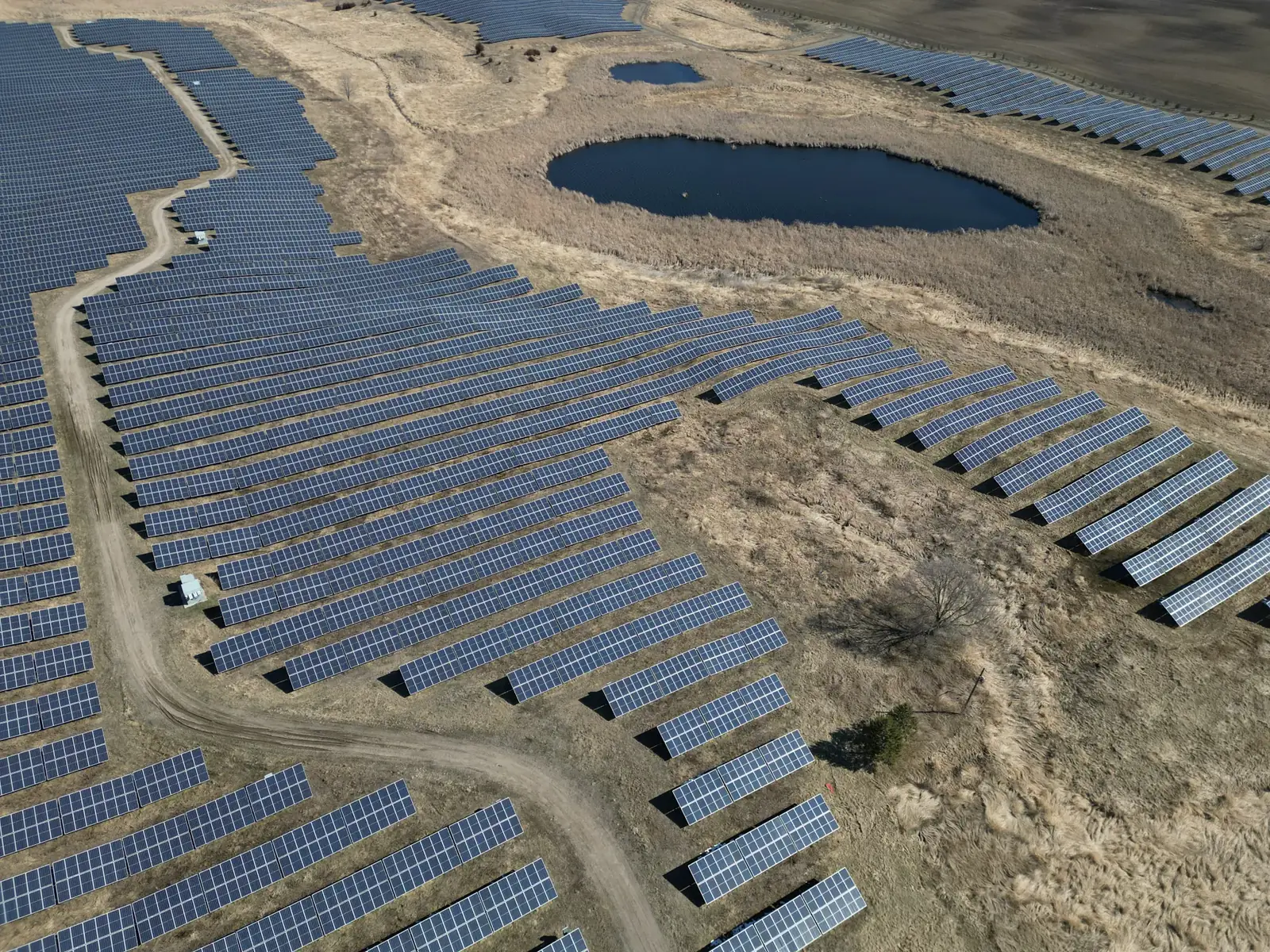
The Department for Energy Security and Net Zero has approved two large ground-mounted solar farms in the space of two days. Green Hill Solar Farm, with a capacity of up to 500 megawatts (MW), was granted development consent on 8 October 2026. The Steeple Renewables Project in Nottinghamshire, which pairs around 450MW of solar with a battery of around 150MW, followed on 9 October. Both decisions were taken by energy minister Baroness Curran on behalf of the Energy Secretary.
Because each scheme is far larger than 50MW, they were treated as nationally significant infrastructure and examined by the Planning Inspectorate rather than decided by local councils. In both cases the examining inspectors recommended approval, for Green Hill subject to some further consultation on detailed provisions before the decision.
The two projects
Steeple Renewables sits in Bassetlaw, Nottinghamshire, and will connect to the existing National Grid substation at the West Burton power station site, where the developer secured an offer of 600MW of connection capacity. The order limits cover about 888 hectares, including land set aside for ecological mitigation. The application was submitted in May 2025 and the inspectors reported to the minister in July 2026.
Green Hill Solar Farm is spread across land in North Northamptonshire, West Northamptonshire and Milton Keynes, south and west of Wellingborough and north of Northampton. It includes battery storage and connects at the Grendon substation. The minister fixed a five-year deadline for work to start once the order comes into force.
Farmland and project lifespan
Both decisions spend many pages on the use of high-grade agricultural land, known as best and most versatile (BMV) land. For Steeple, the minister calculated that more than 90% of the site could be BMV land, well above the developer’s own estimate of 72.1%, but concluded that the siting was justified by the grid connection point and other factors.
At Green Hill, the two Northamptonshire councils objected to a 60-year operating life and argued for the 40 years described as typical in national policy. The minister accepted the 60-year period, while treating the land under the battery and substation, about 4.3 hectares, as permanently lost to farming on a precautionary basis.
What happens next
Consent is a planning milestone rather than a start date. The developers still need to discharge the conditions attached to each order, and raise finance before construction can begin. The Planning Inspectorate said Steeple was the 115th energy application among the 183 applications it has examined to date.
For households, the significance is cumulative: projects of this size add to the low-cost daytime generation that the grid can draw on, and the co-located batteries help shift some of that output into the evening peak. For background on the technology, see our solar energy guide, and for how grid connection offers are being reallocated, read our report on Ofgem’s Gate 2 deadline extension.