
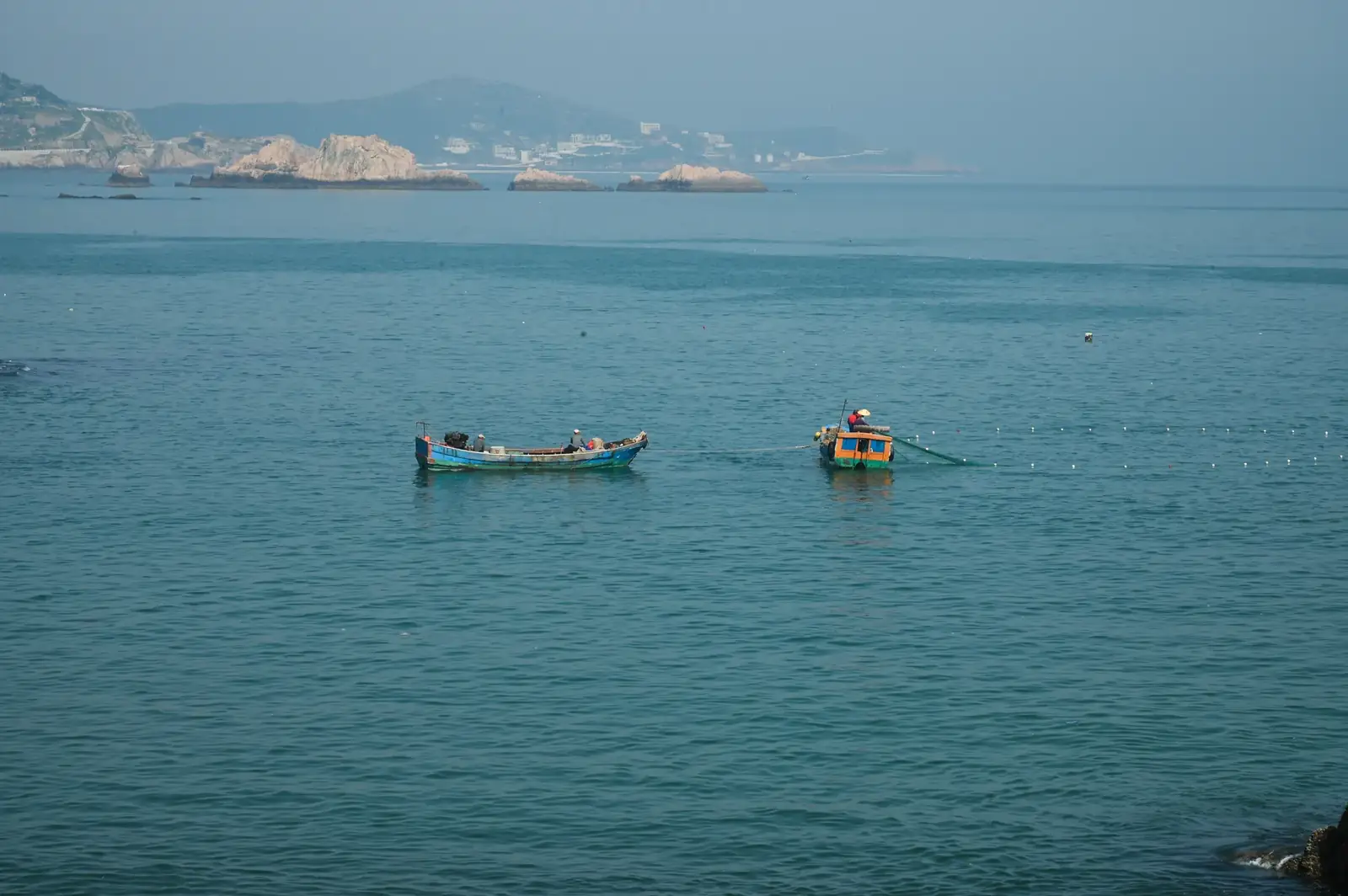
On 3 October 2024 the Scottish Fishermen’s Federation (SFF) used its annual dinner in Edinburgh to warn that large floating offshore wind farms could push fishing boats out of grounds they have worked for generations. First Minister John Swinney was a guest at the event. SFF chief executive Elspeth Macdonald told him that, despite repeated attempts to find solutions, mobile fishing and floating wind could not operate in the same waters. She said the government risked drifting into a position where its offshore wind ambitions damaged Scotland’s food production, and that the industry now needed action rather than further meetings.
Macdonald said fishermen accept the need for the energy transition. She also argued that fishing produces food with relatively low greenhouse gas emissions, so it should not become a casualty of climate policy.
The concern comes from the scale of what is planned. Through the ScotWind leasing round, Crown Estate Scotland awarded option agreements to 20 projects with a combined potential capacity of about 27.6 GW. Several of the larger sites are in water too deep for fixed foundations, so their turbines will float. Floating turbines are held in place by mooring lines and anchors that can spread across a wide area of seabed, so trawling and dredging inside these sites would be very difficult. One example is the Ossian project, led by SSE Renewables with Marubeni and Copenhagen Infrastructure Partners. It is planned to have up to 3.6 GW of capacity across about 858 km² of sea, 84 km off Scotland’s east coast. The SFF also pointed to the proposed 500 MW Stoura scheme east of Shetland, which it said overlaps prime whitefish and pelagic grounds.
What happened next
- 7 October 2024: On a visit to Lerwick fish market, Swinney said the government would work to make sure fishing and offshore energy could coexist, and that careful marine spatial planning was the way to do it.
- 30 May to 22 August 2025: The Scottish Government consulted on an updated Sectoral Marine Plan for Offshore Wind Energy, which will guide where ScotWind and INTOG projects can go. Alongside the plan, ministers said they were working on several measures. These included a study of the combined effect on fisheries of wind farms, cables and marine protected areas, a possible strategic fisheries fund, retraining options and short-term payments for disruption.
- August 2025: In its consultation responses, the SFF called for a halt to further offshore wind consents. It said the mitigation currently on offer works only in very small areas and that there is no credible plan to compensate fishing businesses. It also described the government’s ambition of up to 40 GW by 2040 as far too high. Swinney replied that the industry’s concerns would be listened to.
- June 2025 to March 2026: In the Celtic Sea, The Crown Estate chose Equinor and Gwynt Glas, a joint venture of EDF Renewables UK and ESB, to develop floating wind sites of up to 1.5 GW each off South Wales and South-West England. Both later signed agreements for lease. Ocean Winds signed for the third site in March 2026, which takes the round to as much as 4.5 GW. The Crown Estate says fishing activity was one of the factors used to draw the search areas.
- October 2025: Ossian published additional environmental information on birds and physical processes after consultees asked for it. We found no consent decision by October 2026.
- December 2025: The Scottish Government said adoption of the updated marine plan had slipped to summer 2026. In the meantime, ministers would continue to consider wind farm applications case by case.
Why it matters for UK energy
Floating wind is central to Scotland’s and the Celtic Sea’s plans for new offshore capacity, and conflict over the use of sea space with fishing is one of the main risks to consent. How the two sides settle compensation, access and spatial planning will affect both the timing of these projects and whether coastal communities accept them. For how sites are chosen, see choosing a location for wind turbines.