
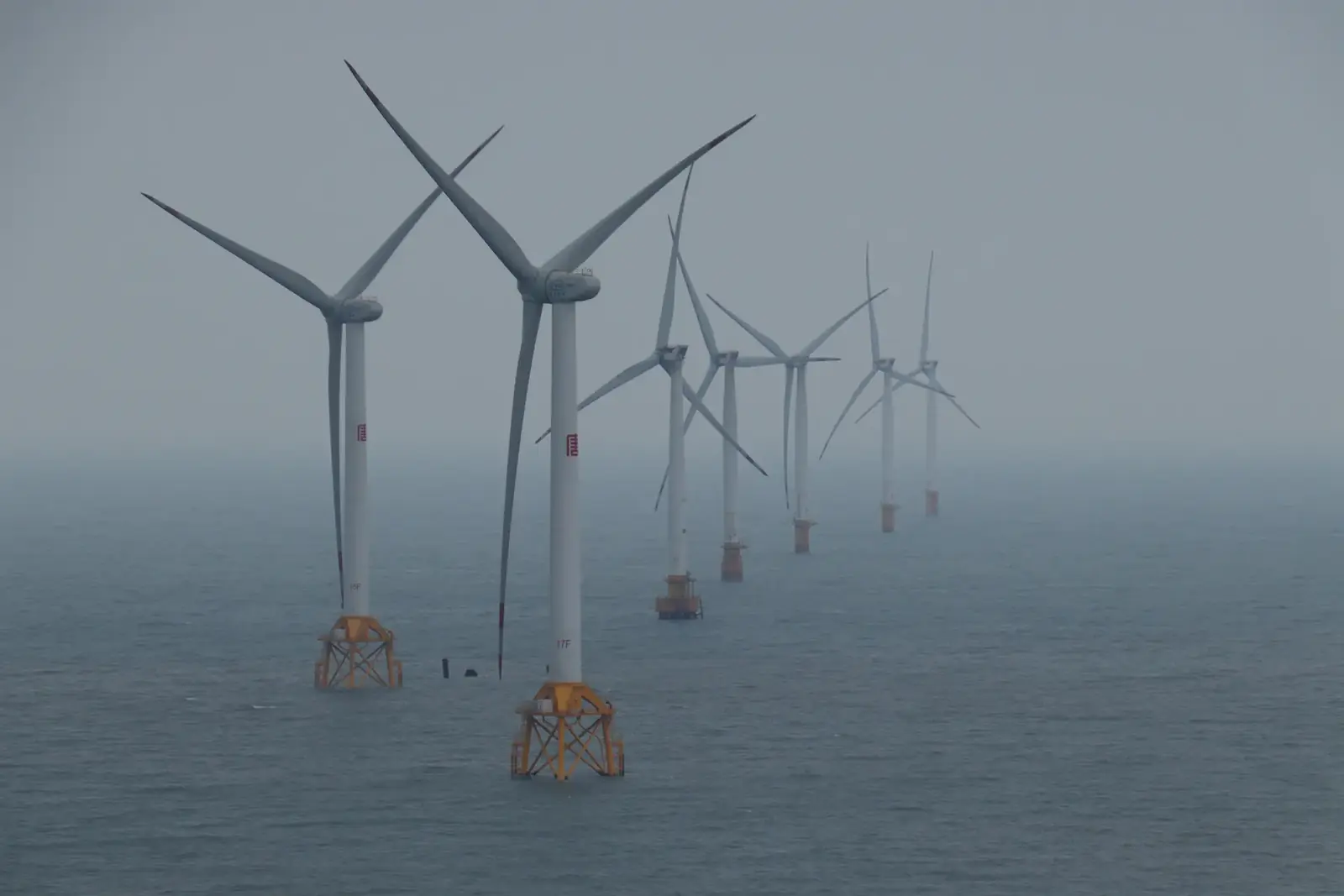
At the end of August 2024, TotalEnergies announced a pilot project to supply part of the electricity for its Culzean gas platform in the UK North Sea from a single floating wind turbine. This was a project launch, not a finished machine. The plan was for a 3 MW turbine moored about 2 km west of the platform, which sits roughly 220 km off the east coast of Scotland. The company expected the turbine to meet around a fifth of Culzean’s power demand and to be fully operational by the end of 2025.
Like most offshore oil and gas installations, Culzean makes its own electricity by burning gas in on-board turbines. Every unit of power supplied by wind instead means less gas burned on the platform and lower emissions from the field. TotalEnergies said the pilot had two purposes. The first was to test how intermittent wind power can work alongside the platform’s existing gas-fired generation. The second was to prove a new floating foundation that could be used in later commercial wind farms.
That foundation is a modular, lightweight semi-submersible hull designed by Ocergy, a US technology company. It is meant to be quick to assemble and cheaper to build than heavier floating designs. The project won seabed rights through Crown Estate Scotland’s Innovation and Targeted Oil and Gas (INTOG) leasing round. INTOG was set up to encourage offshore wind that powers oil and gas installations directly, and 13 projects secured seabed rights through it in 2023.
The emissions and power-share figures come from TotalEnergies and have not been tested in operation. A single 3 MW turbine is small next to commercial offshore wind farms, which are measured in hundreds of megawatts or gigawatts. Its value lies mainly in the data it can produce.
What happened next
- November 2024: Fabrication of the floating foundation began. Archer Wind is the main engineering, fabrication and installation contractor.
- 30 March 2026: NEO Energy, Repsol UK and TotalEnergies’ UK upstream business merged to form NEO NEXT+ Energy. The new company now leads the Culzean floating wind project.
- June 2026: The project’s construction method statement, cable plan and maintenance plan were published through Scotland’s Marine Directorate licensing process. The Ocergy floater was also loaded out at the quayside during June.
- July 2026: The tower, nacelle and blades of a Vestas turbine were fitted to the floater. Trade press reported that this was the first commercial use of Ocergy’s design and that the unit was ready to be towed to site.
- 3 August 2026: Archer said assembly of the turbine and floater was complete.
The original target of full operation by the end of 2025 has been missed. As of early October 2026 we had found no public confirmation that the turbine had been towed out, connected to the platform or started generating. Once it is running, the developer still expects it to supply about 20% of the platform’s electricity.
Why it matters for UK energy
Projects like this one test whether floating wind can cut emissions from North Sea production while the basin is still pumping gas. They also give early operating data for the floating designs that much of Scotland’s future deep-water wind capacity will need. Background on how turbines turn wind into power is in our guide to harnessing the power of the wind, and newer turbine designs are covered in next-gen turbine technology.