
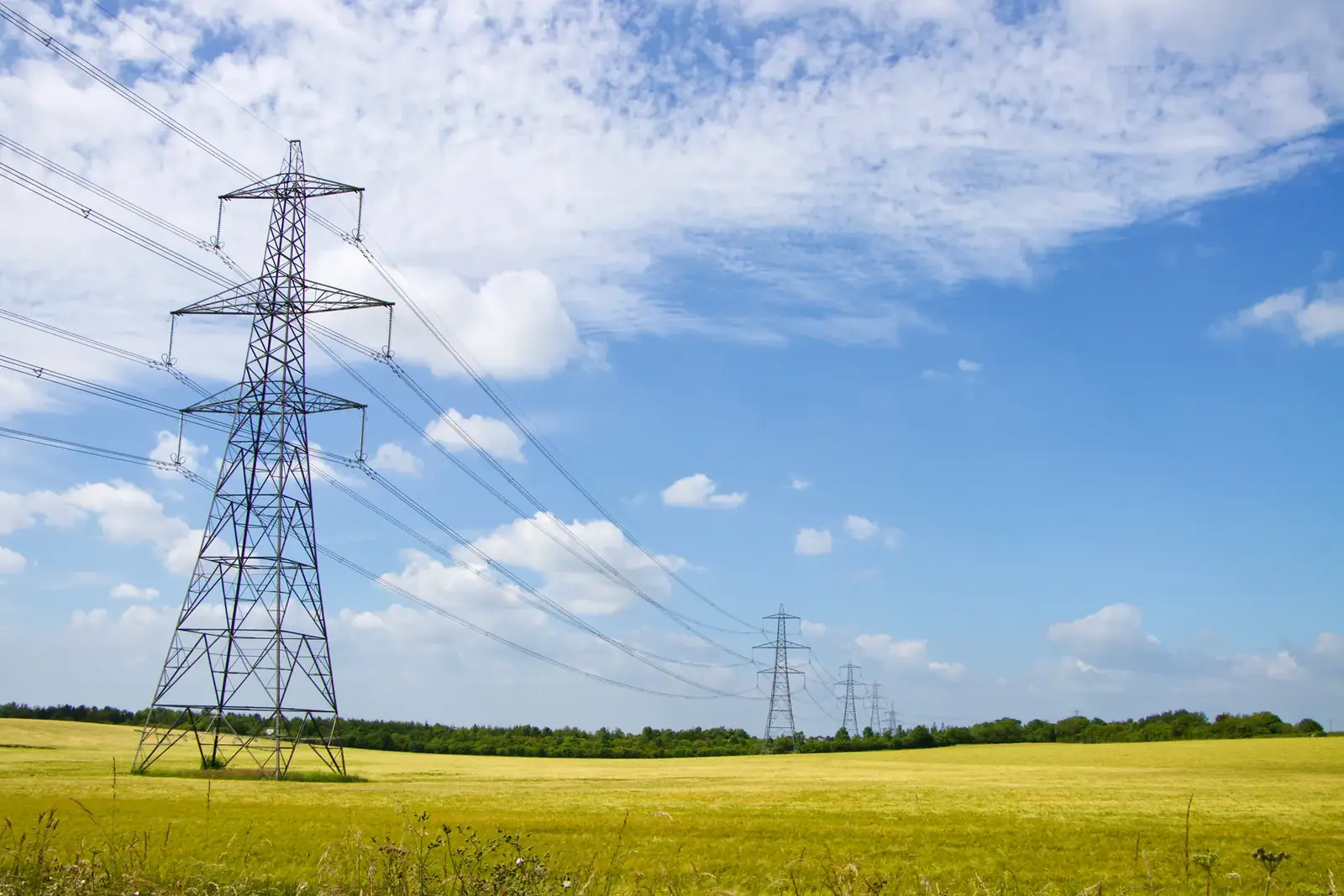
Ofgem has signed off a £642.1 million funding package for National Grid Electricity Transmission’s Bramford to Twinstead project, a reinforcement of the high-voltage network between Suffolk and Essex. The regulator announced the decision on 19 October 2026.
National Grid had asked for £702.7 million. Ofgem cut £60.6 million from that request after reviewing the proposed costs, which by our own calculation is a reduction of about 8.6%. The final figure confirms the “minded to” position Ofgem set out in its project assessment in January this year.
What is being built
The upgrade runs from Bramford substation in Suffolk to Twinstead Tee in Essex. According to Ofgem, it includes:
- 18km of new overhead line
- 11km of underground cable
- a new substation at Twinstead Green
- upgrades to the existing Bramford substation
The aim is to carry more low-carbon and renewable power from East Anglia, where a large amount of new generation is expected to connect by the end of the decade, and to meet rising demand.
Why it matters for constraint costs
When the network cannot move all the power that wind farms produce, the system operator pays generators to turn down. These payments are known as constraint costs, and the process is often called curtailment. Ofgem says the extra capacity from this line should help reduce those costs.
The project is one of 26 transmission schemes being fast-tracked under Ofgem’s Accelerated Strategic Transmission Investment (ASTI) framework. ASTI shortens the approval process for strategically important onshore lines, while the regulator still reviews costs. It sits alongside other changes to how projects reach the grid, including Ofgem’s proposal to let developers build their own connections.
What it means for bills
Ofgem does not pay transmission owners directly. National Grid raises the money through debt and equity, then recovers the costs it is allowed over time through network charges, which are part of every household’s electricity bill.
Ofgem says the cost of Bramford to Twinstead is already included in its RIIO-3 price control forecasts, which run to March 2031. The regulator estimates that the overall RIIO-3 package could add £108 to bills by 2031. Around £60 of that is for new electricity transmission infrastructure, including this project. Ofgem estimates that this transmission spending will save about £80 compared with not investing in the grid.
Most of the £108 relates to investment cases that Ofgem expects to receive later in the RIIO-3 period through “reopener” mechanisms.
What happens next
Ofgem says it will keep monitoring spending on the project, and that any future allowances must show the costs are necessary, efficient and properly evidenced. More background on how the regulator works is in our Ofgem glossary entry.